

Can Fleet Tracking Lead to Fuel Cost Savings?
GPS fleet tracking can significantly reduce fuel costs by helping managers optimise routes and reduce unnecessary mileage.
Real-time location data allows for dynamic rerouting to avoid traffic delays, which cuts down on wasted fuel from idling or detours.
Telematics reports can highlight fuel-intensive driving habits such as rapid acceleration, harsh braking and excessive idling, enabling targeted driver training.
Monitoring fuel card transactions alongside tracking data can also prevent misuse or unauthorised refuelling.
Over time, these measures not only reduce fuel consumption but also lower overall operational costs.
For many businesses, the savings on fuel alone can cover the cost of implementing a GPS tracking system, making it one of the most immediate and measurable benefits of the technology.

Does Fleet Tracking Cause Driver Safety Improvements?
Improving driver safety is one of the most valuable benefits of GPS fleet tracking. Telematics systems record behaviours such as speeding, harsh braking and sharp cornering, allowing managers to identify high-risk driving patterns.
This information can be used for targeted coaching and training programmes to encourage safer habits.
Many systems provide real-time alerts when unsafe driving occurs, enabling immediate intervention.
Safer driving reduces the risk of accidents, protects employees and other road users, and can lead to lower insurance premiums.
Some platforms also integrate with dashcams, providing visual evidence for incident reviews and insurance claims.
By promoting a culture of accountability, GPS tracking helps create a safer working environment for drivers and supports compliance with health and safety regulations.

Can Fleet Tracking Lead to Increased Productivity?
GPS fleet tracking increases productivity by streamlining scheduling, routing and job allocation.
Managers can assign the nearest available driver to a new task, reducing travel time and maximising the number of jobs completed in a day.
Live updates allow rapid adjustments to plans when delays occur, keeping operations on track.
Automated mileage logs and compliance reporting reduce the administrative burden on drivers, allowing them to focus more on their core tasks.
Additionally, analysing journey data can reveal inefficiencies in routes or workflows, enabling continuous improvement.
With better planning and time management, businesses can serve more customers, meet tighter deadlines and improve overall service delivery without increasing fleet size.

Can Fleet Tracking Help Lower Insurance Premiums?
Many insurance providers offer reduced premiums to fleets that use GPS tracking and telematics.
By monitoring driver behaviour and reducing accident risks, businesses present a lower risk profile to insurers.
Detailed driving records and incident data can be used to defend against false claims, further lowering potential liabilities. Some insurers offer usage-based policies that calculate premiums based on actual driving data, rewarding safe and efficient operations.
Demonstrating proactive risk management through tracking technology can also strengthen negotiations when renewing policies.
Over time, these savings can be substantial, especially for fleets with a history of claims or operating in high-risk sectors. The combination of fewer accidents and reduced premiums makes GPS tracking a financially smart investment.

Can Fleet Tracking Reduce Vehicle Wear and Tear?
Harsh driving behaviours such as rapid acceleration, sharp braking and speeding contribute to faster wear and tear on vehicles. GPS tracking systems record these events, allowing managers to address them through driver coaching.
By promoting smoother driving, businesses can extend the lifespan of components such as brakes, tyres and suspension systems.
Route optimisation also reduces the total mileage driven, lowering the overall rate of vehicle deterioration.
Preventative maintenance schedules, informed by tracking data, ensure that small issues are addressed before they become costly repairs.
These measures reduce downtime, minimise maintenance costs and help keep vehicles in peak condition for longer, maximising return on investment in the fleet.

What are the Compliance Benefits of Fleet Tracking?
GPS fleet tracking simplifies compliance with industry regulations, such as driver hours, vehicle inspections and emissions reporting.
Automated logging of journey times ensures adherence to hours-of-service rules, while integrated checklists can record vehicle safety inspections.
Some systems track emissions data to help meet environmental reporting requirements.
Having accurate, time-stamped records reduces the risk of penalties and makes audits faster and less disruptive.
Digital records also eliminate the need for manual paperwork, reducing administrative workload and the chance of errors.
By providing a centralised, verifiable record of compliance activities, GPS tracking helps protect the business from legal and financial risks.

Does Fleet Tracking Improve Customer Service?
Accurate, real-time tracking allows businesses to provide customers with precise delivery or arrival times, improving satisfaction and trust.
If a delay occurs, managers can proactively inform the customer and provide an updated time, reducing frustration.
Proof-of-delivery features and time-stamped journey logs provide transparency, helping resolve disputes quickly.
For service businesses, dispatching the nearest available vehicle to urgent jobs improves response times.
These improvements in communication and reliability often lead to repeat business and positive word-of-mouth referrals.
By integrating tracking information with customer relationship management systems, businesses can offer a consistently high level of service that strengthens client relationships.
How Does Fleet Tracking Help Theft Recovery?
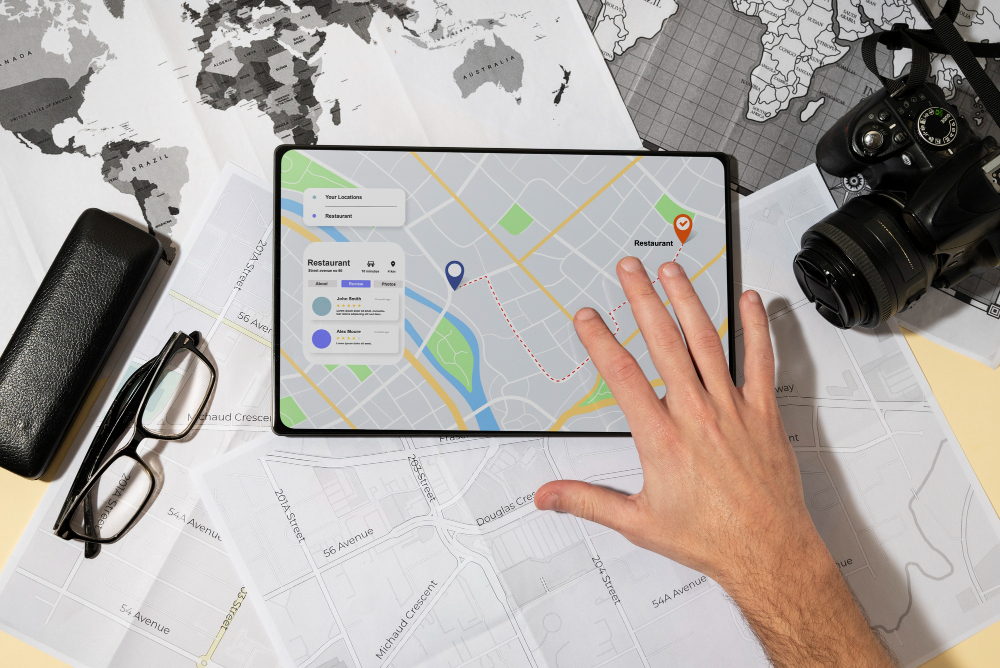
One of the most immediate benefits of GPS tracking is the ability to locate stolen vehicles quickly. Real-time location data enables police to track and recover assets, often before significant damage occurs.
Some systems include geofencing alerts that notify managers if a vehicle moves outside its designated area without authorisation.
In addition to protecting vehicles, tracking devices can also be installed on valuable equipment or trailers, ensuring that all high-value assets are monitored.
Rapid recovery not only reduces financial loss but also minimises downtime, helping the business return to normal operations as quickly as possible.

Can Fleet Tracking Reduce Environmental Impact?
By optimising routes, reducing idling and encouraging smoother driving, GPS tracking helps lower fuel consumption and carbon emissions.
Many systems provide reports on CO₂ output, allowing businesses to monitor and improve their environmental performance.
Reducing unnecessary mileage also decreases noise pollution and wear on road infrastructure.
Some fleets use tracking data to support green initiatives, such as transitioning to electric or hybrid vehicles, by analysing journey patterns to determine suitability.
Demonstrating a commitment to environmental responsibility can improve brand reputation and help meet corporate sustainability targets.
These environmental benefits often go hand in hand with cost savings, making them a win-win for businesses.

What is the Long-term ROI from Fleet Tracking?
While the initial investment in GPS tracking involves hardware and subscription costs, the long-term return on investment can be substantial.
Savings come from multiple areas, including reduced fuel use, lower maintenance costs, fewer accidents, decreased insurance premiums and improved productivity.
Over time, the system pays for itself many times over, especially when combined with ongoing optimisation efforts.
Detailed performance data allows for continuous improvements, ensuring that the benefits increase rather than diminish.
Businesses that fully embrace fleet tracking technology often find that it becomes an integral part of their operations, delivering sustained financial and operational gains well into the future.
Read our next section: Fleet Tracking Costs Explained
Manage Consent
Functional Always active
The technical storage or access is strictly necessary for the legitimate purpose of enabling the use of a specific service explicitly requested by the subscriber or user, or for the sole purpose of carrying out the transmission of a communication over an electronic communications network.
Preferences
The technical storage or access is necessary for the legitimate purpose of storing preferences that are not requested by the subscriber or user.
Statistics
The technical storage or access that is used exclusively for statistical purposes. The technical storage or access that is used exclusively for anonymous statistical purposes. Without a subpoena, voluntary compliance on the part of your Internet Service Provider, or additional records from a third party, information stored or retrieved for this purpose alone cannot usually be used to identify you.
Marketing
The technical storage or access is required to create user profiles to send advertising, or to track the user on a website or across several websites for similar marketing purposes.