

What is the Definition of Grey Fleet
The grey fleet refers to privately owned vehicles that employees use for work-related journeys.
These vehicles are not owned or leased by the company but are still used to carry out business tasks, such as visiting clients or attending meetings.
Although they are privately owned, employers have a legal responsibility to ensure they are safe, roadworthy and properly insured for business use.
Grey fleet vehicles can range from small cars to vans, depending on the nature of the work.

What are Common Grey Fleet Scenarios?
Grey fleet use is common in organisations where staff are not assigned a company vehicle.
Typical scenarios include salespeople driving their own cars to client sites, engineers travelling between jobs or managers attending external meetings.
It can also occur when employees occasionally use their vehicles for business trips instead of public transport or rental cars.

What are the Legal Responsibilities for Grey Fleet?
Employers have a duty of care under health and safety legislation to ensure that grey fleet vehicles are safe and that drivers are competent.
This includes verifying MOT certificates, insurance policies and driving licences.
Failure to meet these responsibilities can result in legal consequences, fines and reputational damage if an incident occurs during a work-related journey.

What are the Insurance Requirements for Grey Fleet?
Employees using their own vehicle for business must have the correct level of insurance, usually referred to as Class 1 Business Use.
Standard personal car insurance does not typically cover work journeys beyond commuting.
Employers should check insurance documents regularly to ensure they are valid and appropriate for the work being undertaken.

Are There Safety Checks for Grey Fleet Vehicles?
Regular safety checks are essential for grey fleet vehicles. Employers should request evidence of annual MOTs, vehicle servicing and tyre condition.
Some organisations provide checklists for employees to complete before undertaking business journeys. These checks reduce the risk of breakdowns or accidents and help maintain compliance with safety regulations.

Can Fleet Tracking Offer Mileage and Expense Tracking for Grey Fleet Vehicles?
Accurately recording mileage is important for both expense reimbursement and compliance purposes.
Fleet management software or mileage tracking apps can be used to verify distances travelled and ensure that expense claims are correct.
This also helps businesses monitor how frequently grey fleet vehicles are used and the associated costs.

Are There Environmental Concerns for Grey Fleet Vehicles?
Grey fleet vehicles are often older and less fuel-efficient than company-owned cars, leading to higher emissions.
Businesses concerned about sustainability may encourage alternatives such as public transport, carpooling or short-term hire of more fuel-efficient vehicles.
Monitoring mileage and emissions from grey fleet use can help identify opportunities for greener travel policies.
What are the Technology Solutions for Grey Fleet?
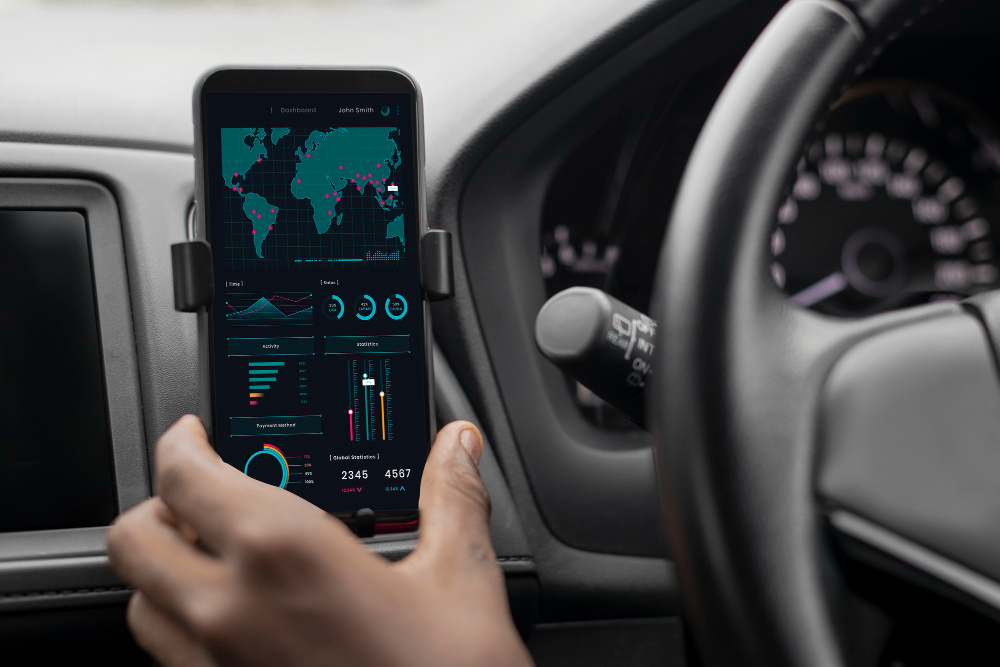
Technology can help manage grey fleet risks and costs.
GPS tracking apps allow journey verification, while document management systems make it easy to store and check insurance and MOT records.
Expense management software can integrate with mileage logs, reducing administrative work and preventing errors.

Can Fleet Software Help With Grey Fleet Risk Management?
Grey fleet use carries risks, including accidents, legal non-compliance and reputational damage.
Employers should implement a clear policy outlining driver responsibilities, insurance requirements and safety procedures.
Regular audits and training help ensure compliance and reduce liability.
Proactive risk management also demonstrates a commitment to employee welfare.

Should you have a Grey Fleet Policy?
A formal grey fleet policy provides clear guidelines for both employers and employees.
It should cover eligibility, insurance requirements, safety checks, mileage claims and environmental considerations.
Having a written policy ensures consistency, reduces misunderstandings and helps the organisation meet its legal and ethical responsibilities when employees use their own vehicles for work.
Go to our main Fleet Tracking Page
Manage Consent
Functional Always active
The technical storage or access is strictly necessary for the legitimate purpose of enabling the use of a specific service explicitly requested by the subscriber or user, or for the sole purpose of carrying out the transmission of a communication over an electronic communications network.
Preferences
The technical storage or access is necessary for the legitimate purpose of storing preferences that are not requested by the subscriber or user.
Statistics
The technical storage or access that is used exclusively for statistical purposes. The technical storage or access that is used exclusively for anonymous statistical purposes. Without a subpoena, voluntary compliance on the part of your Internet Service Provider, or additional records from a third party, information stored or retrieved for this purpose alone cannot usually be used to identify you.
Marketing
The technical storage or access is required to create user profiles to send advertising, or to track the user on a website or across several websites for similar marketing purposes.